
On 1 June last, SIRO launched its’ 10 Gigabit (10G) enabled broadband network in Galway city. The first city in Ireland to have this high speed, large bandwidth network at its disposal.
At the end August, SIRO’s entire fibre broadband network was upgraded to 10 Gigabits. This €10 million, 15-month upgrade project includes our full existing SIRO network, i.e., 450,000+ premises we have already passed and the further 320,000 we are in the process of passing right now.
10G: what is it?
From the middle of last year, SIRO began the process of upgrading its’ existing network to a 10 Gigabit network using XGS-PON technology.
G-PON stands for Gigabit PON or 1 Gigabit PON.
The “X” in XGS represents the number 10, and the letter “S” stands for symmetrical, XGS-PON = 10 Gigabit Symmetrical PON.
The upgrade allows SIRO to turbo-charge our existing network from a one Gigabit network to a network providing up to 10G connections which are symmetrical (same upload and download speeds), much more reliable, with lower latencies and better security.
The point of a 10G network is the flexibility to scale up seamlessly as your data demands grow. One Gigabit to two, four, six Gigabits and so on
What can it do?
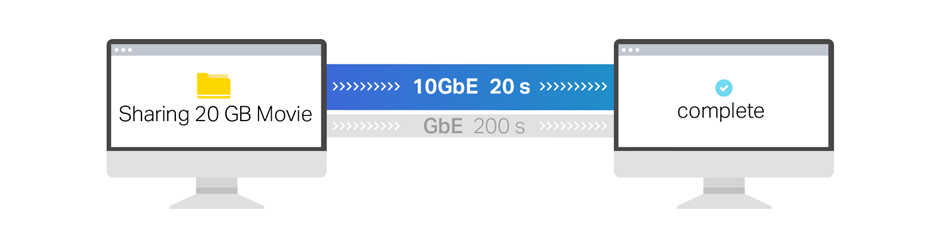
One of the most prominent and headline grabbing aspects of 10 G is speed, specifically speed of data transfer. 10 Gbps lets you transfer at a rate of 1.25 GB/s when you copy a file to another computer across the SIRO network. This equates to sending a 20 GB file in under 20 seconds.
At SIRO we know, that at least for the short-to-medium term, end users of this much larger bandwidth will be enterprise/business users vs. residential consumers.
It makes sense.
It is businesses, whether small or large, who typically move large data sets. However, the number of businesses who falls into this category is not as niche as it once might have been. As ever more intensive applications run on our servers or are stored in the Cloud, the amount of data created, stored and transferred increases each day. Add in the growing automation of once manual tasks and the need for high-speed internet as the key enabler of these processes becomes clear.
10G will become the technology platform for this phase of digital adaptation across the world. It will ensure that technology in our lives becomes even more embedded and integrated
Speed and bandwidth are also important for business where large numbers of colleagues and clients need to connect at once. Both now have an expectation of being able to access services when they require them and that this access is dependable and consistent.

Business, for reasons of productivity, reputation and of course the bottom line, cannot afford to have any bottlenecks in their connectivity which can hold their business back.
Businesses with many employees and multiple clients all logging on at the same time are obvious candidates for much higher speeds. Yet over recent years as our use of digital technologies has grown, it has spawned new types of business which are equally heavy data users.
Businesses in the creative sector is one example. While they may not be big in terms of employee head count, they are big users of data. Think content creators in advertising, digital or marketing agencies, animators, film or videographers, game design – all transferring large files each day. Though smaller companies, the creative sector in its’ totality is a significant sector, employing up to 5% of the Irish workforce or about 100,000.
Do I need 10G?
In truth, it depends.
If you are an individual, doing video editing, streaming, audio production, activities which involve a large amount of data and if your workflow currently lags due to slow speeds, then likely you do need to move up the Gigabit ranks from the standard one Gigabit to higher speeds. The point of a 10G network is the flexibility to scale up seamlessly as your data demands grow. One Gigabit to two, four, six Gigabits and so on.
The use case is much clearer if you are a business or enterprise. If your business has large file sizes to deal; you use HD streaming or your company is growing in terms of capability or headcount, then there is a real risk of congestion on your network necessitating larger bandwidth.
10G will become the technology platform for this phase of digital adaptation across the world.
An important additional benefit of SIRO’s 10G network is affordability. Previously access to high-speed point-to-point (P2P) services was largely just available to very big organisations with substantial IT budgets. With this upgrade SIRO have changed that market limiting dynamic.

A 10 Gigabit Future?
Just as when once the need for one Gigabit broadband met with questions on the use case of that level of bandwidth; some might today ask a similar question of 10 Gigabit broadband.
Those of us who have seen the relentless march of data demands, know better than to ask that question anymore.
Instead, the more pertinent question for business and society to consider are what processes and technologies (many, not yet invented) can this level of bandwidth unlock for the benefit of all?
10G will become the technology platform for this phase of digital adaptation across the world. It will ensure that technology in our lives becomes even more embedded and integrated.
Healthcare professionals will monitor and diagnose their patients remotely in real-time, our students will collaborate and learn not just from their classmates but with other children across the world and virtual and augmented reality (VR and AR) will change many aspects of how we live from retail, to home entertainment, to the world of work.
In SIRO we have always sought to drive innovation in the Irish broadband market to make the probable, possible. Today’s focus may be on 10 Gigabits, but the direction of journey to 25 Gigabits is already coming into view.
To find out if your business can avail of SIRO for Business, please visit
www.siro.ie/search-your-eircode



 SIRO is a joint venture company between ESB and Vodafone, founded in 2015. SIRO’s fibre broadband network is built on the ESB electricity infrastructure, trusted for its reliability and resilience. Overall, the company is investing more than €1 billion in delivering high speed, future proofed broadband across Ireland.
Commenting on the announcement, SIRO’s CEO, John Keaney, said:
SIRO is a joint venture company between ESB and Vodafone, founded in 2015. SIRO’s fibre broadband network is built on the ESB electricity infrastructure, trusted for its reliability and resilience. Overall, the company is investing more than €1 billion in delivering high speed, future proofed broadband across Ireland.
Commenting on the announcement, SIRO’s CEO, John Keaney, said:
 With one of the busiest shopping days of the year, Black Friday, fast approaching, it’s time to start researching where to shop online and how to get the best deals.
Black Friday, once a US tradition, now a global phenomenon is where deal-savvy customers piled into shopping malls after Thanksgiving ready to buy discounted goods for Christmas.
Now, in Ireland, it’s certainly on consumers’ minds. RTE noted that Google searches for "Black Friday" had increased by 138% from 2020 to
With one of the busiest shopping days of the year, Black Friday, fast approaching, it’s time to start researching where to shop online and how to get the best deals.
Black Friday, once a US tradition, now a global phenomenon is where deal-savvy customers piled into shopping malls after Thanksgiving ready to buy discounted goods for Christmas.
Now, in Ireland, it’s certainly on consumers’ minds. RTE noted that Google searches for "Black Friday" had increased by 138% from 2020 to 
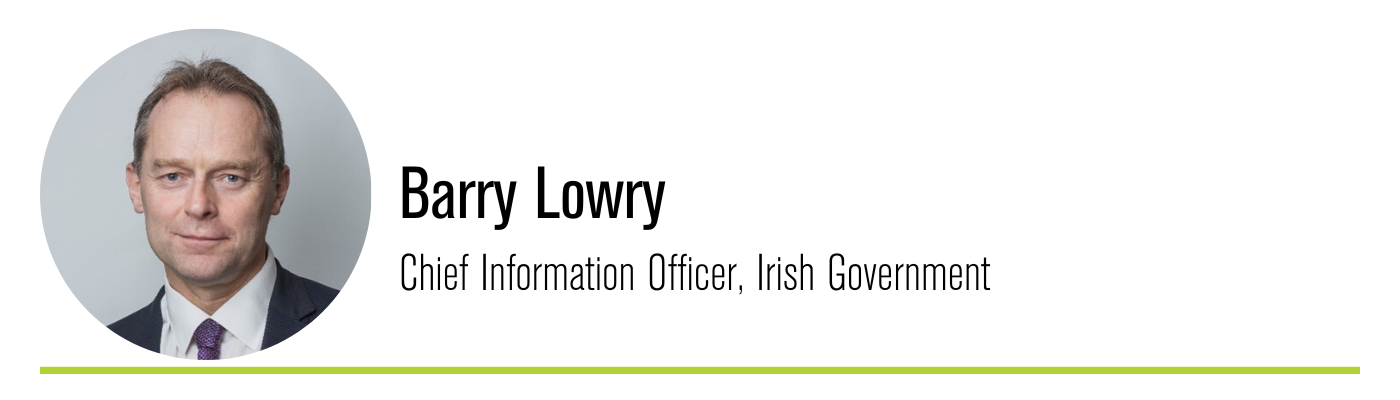 Barry has spent over thirty-five years working in ICT. He started as a Trainee Programmer in the Northern Ireland Civil Service and progressed through various roles to eventually become the Director of ICT Shared Services and Strategy for the NI Government. Barry has been CIO for the Irish Government since April 2016 with the primary task of taking forward the Public Service ICT and eGovernment Strategies. These set out ambitions for developing the use of shared services, digital services and data to better serve the people of Ireland and ensure that Ireland is well-placed to benefit from European initiatives such as the Digital Single Market.



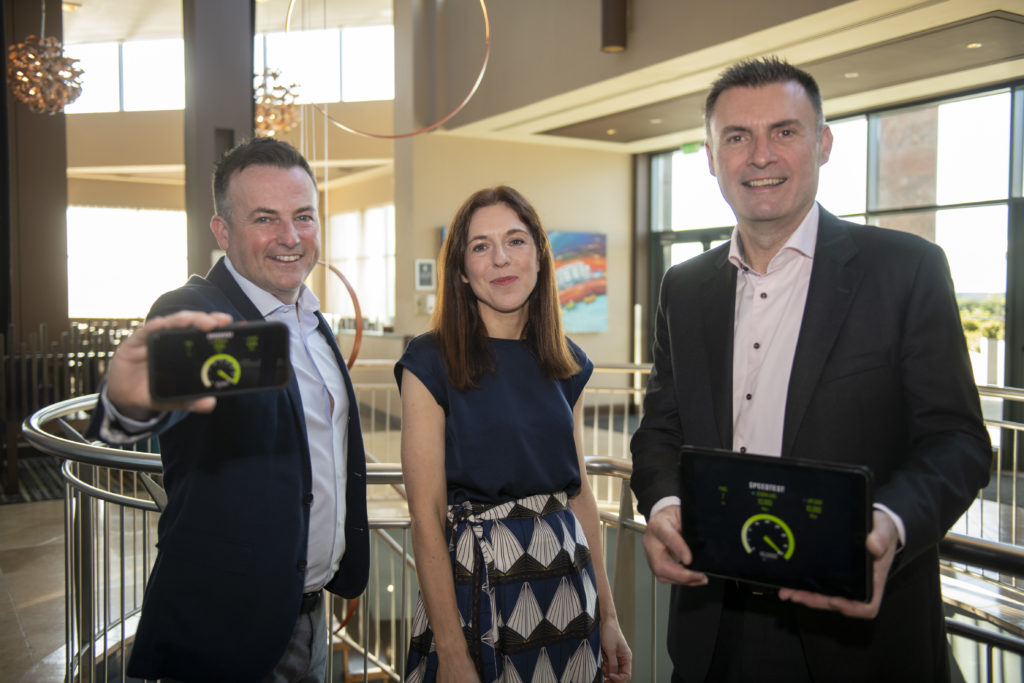 SIRO, a joint venture between ESB and Vodafone, is currently rolling out a 100% fibre broadband network across 154 towns and cities across Ireland, with services currently available to 450,000+ premises and reaching 770,000 premises over the next four years.
In October 2021, SIRO launched 2 Gigabit speeds for the residential market. Today’s announcement of 10 Gigabits is initially focused on the enterprise market. The latter have a need to progressively scale up their bandwidth from 2 Gigabits up to 10 Gigabits in the short to medium term.
The upgrade to 10 Gigabits reflects SIRO’s ambition to continuously bring innovation to the Irish broadband market. SIRO is Ireland’s sole open-access wholesale-only broadband operator and was first to introduce 1 Gigabit broadband to Irish homes. It is now stretching its offering further with speeds of 2 Gigabits for residential and up to 10 Gigabits for enterprise customers, respectively.
The benefits of multi-gigabit speeds include:
Ensure fastest speeds: Symmetrical speeds up to ten times faster than the best standard currently available of up to 1 Gigabit. A 10 Gigabit connection can transfer 1 Gigabit of data in 0.8 seconds or upload a file of 20 Gigabits in under 20 seconds.
Provide scalable connectivity: A future-proofed connection to support the increasing number of connected devices used by businesses.
Enhance cyber protection: Enhanced data and network protection by facilitating network management systems which reduce cybersecurity risks.
Support new technologies: The bandwidth to integrate emerging technologies, including artificial intelligence, virtual reality, 3D technology or voice recognition tools.
Commenting on the announcement, SIRO CEO, John Keaney, said:
“For SIRO, completing our transition to a 10 Gigabit-enabled network is about ensuring we continue to lead the market in terms of delivering on Ireland’s future broadband needs for the decades ahead.
“All aspects of business processes and operations are increasingly digitised. Reliable and future proofed connectivity is the foundation upon which they all rest.
“This upgrade gives enterprises the opportunity to plan and scale up their bandwidth requirements as their data demands and business requirements grow.
Rather than wait for the broadband infrastructure to catch up, businesses can now have the certainty that they can access higher speeds and capacity as and when they need it,” added Mr. Keaney.
To find out if you can avail of 10 Gigabit today, check your Eircode today!
[lookup_modal type="eircode" button-text="Search Your Eircode Today" position="mid" title="Search Your Eircode Today"]
SIRO, a joint venture between ESB and Vodafone, is currently rolling out a 100% fibre broadband network across 154 towns and cities across Ireland, with services currently available to 450,000+ premises and reaching 770,000 premises over the next four years.
In October 2021, SIRO launched 2 Gigabit speeds for the residential market. Today’s announcement of 10 Gigabits is initially focused on the enterprise market. The latter have a need to progressively scale up their bandwidth from 2 Gigabits up to 10 Gigabits in the short to medium term.
The upgrade to 10 Gigabits reflects SIRO’s ambition to continuously bring innovation to the Irish broadband market. SIRO is Ireland’s sole open-access wholesale-only broadband operator and was first to introduce 1 Gigabit broadband to Irish homes. It is now stretching its offering further with speeds of 2 Gigabits for residential and up to 10 Gigabits for enterprise customers, respectively.
The benefits of multi-gigabit speeds include:
Ensure fastest speeds: Symmetrical speeds up to ten times faster than the best standard currently available of up to 1 Gigabit. A 10 Gigabit connection can transfer 1 Gigabit of data in 0.8 seconds or upload a file of 20 Gigabits in under 20 seconds.
Provide scalable connectivity: A future-proofed connection to support the increasing number of connected devices used by businesses.
Enhance cyber protection: Enhanced data and network protection by facilitating network management systems which reduce cybersecurity risks.
Support new technologies: The bandwidth to integrate emerging technologies, including artificial intelligence, virtual reality, 3D technology or voice recognition tools.
Commenting on the announcement, SIRO CEO, John Keaney, said:
“For SIRO, completing our transition to a 10 Gigabit-enabled network is about ensuring we continue to lead the market in terms of delivering on Ireland’s future broadband needs for the decades ahead.
“All aspects of business processes and operations are increasingly digitised. Reliable and future proofed connectivity is the foundation upon which they all rest.
“This upgrade gives enterprises the opportunity to plan and scale up their bandwidth requirements as their data demands and business requirements grow.
Rather than wait for the broadband infrastructure to catch up, businesses can now have the certainty that they can access higher speeds and capacity as and when they need it,” added Mr. Keaney.
To find out if you can avail of 10 Gigabit today, check your Eircode today!
[lookup_modal type="eircode" button-text="Search Your Eircode Today" position="mid" title="Search Your Eircode Today"] 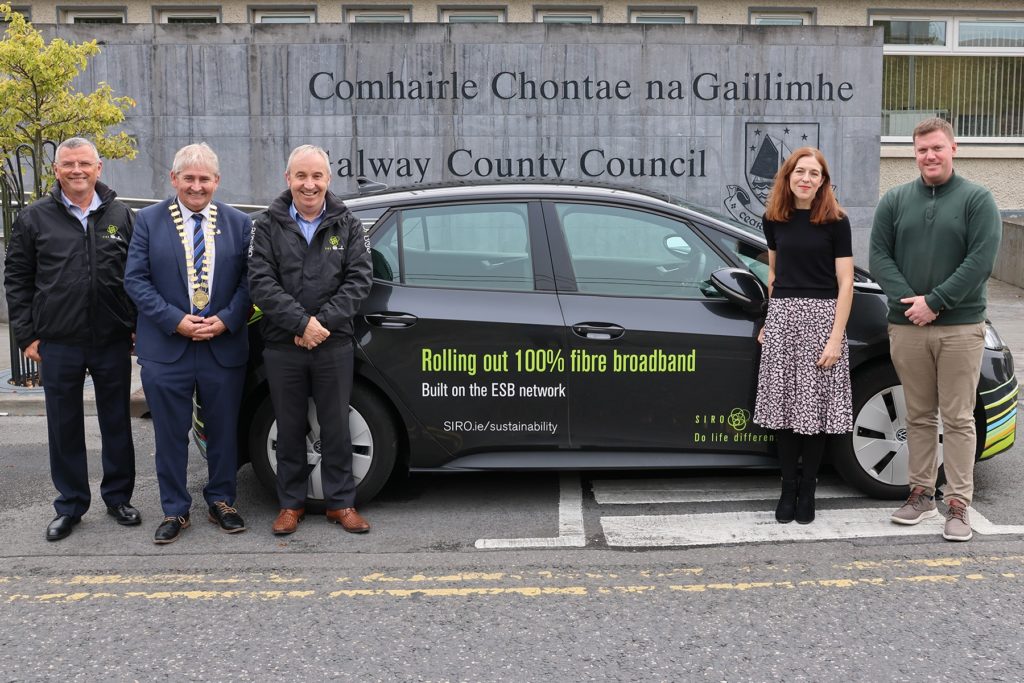 The rollout in Ballinasloe and Loughrea is part of SIRO’s ongoing roll out in Galway city and county. The company has already made its full fibre broadband network available to over 33,000 homes and businesses in Galway city. The investment is part of the company’s ongoing fibre rollout across Ireland, targeting 154 cities and towns and 770,000 premises.
Areas within Ballinasloe that will be connected include (but are not limited to): Townparks, Portnick, Poolboy, Dunlo, Kilgarve, Church Street, Bóthar Sáirséal, Meadowbrook, Beechlawn, Esker Hills.
Areas within Loughrea that will be connected include (but are not limited to): Portumna Road, Danesfort, Barrack Street, Abbey Street, Athenry Road, Ashlawn, Galway Road, Gort Road, Main Street, Cosmona, and The Hill.
SIRO’s network in Ballinasloe, Loughrea and Galway City is a 10 Gigabit-enabled network, which means that
The rollout in Ballinasloe and Loughrea is part of SIRO’s ongoing roll out in Galway city and county. The company has already made its full fibre broadband network available to over 33,000 homes and businesses in Galway city. The investment is part of the company’s ongoing fibre rollout across Ireland, targeting 154 cities and towns and 770,000 premises.
Areas within Ballinasloe that will be connected include (but are not limited to): Townparks, Portnick, Poolboy, Dunlo, Kilgarve, Church Street, Bóthar Sáirséal, Meadowbrook, Beechlawn, Esker Hills.
Areas within Loughrea that will be connected include (but are not limited to): Portumna Road, Danesfort, Barrack Street, Abbey Street, Athenry Road, Ashlawn, Galway Road, Gort Road, Main Street, Cosmona, and The Hill.
SIRO’s network in Ballinasloe, Loughrea and Galway City is a 10 Gigabit-enabled network, which means that 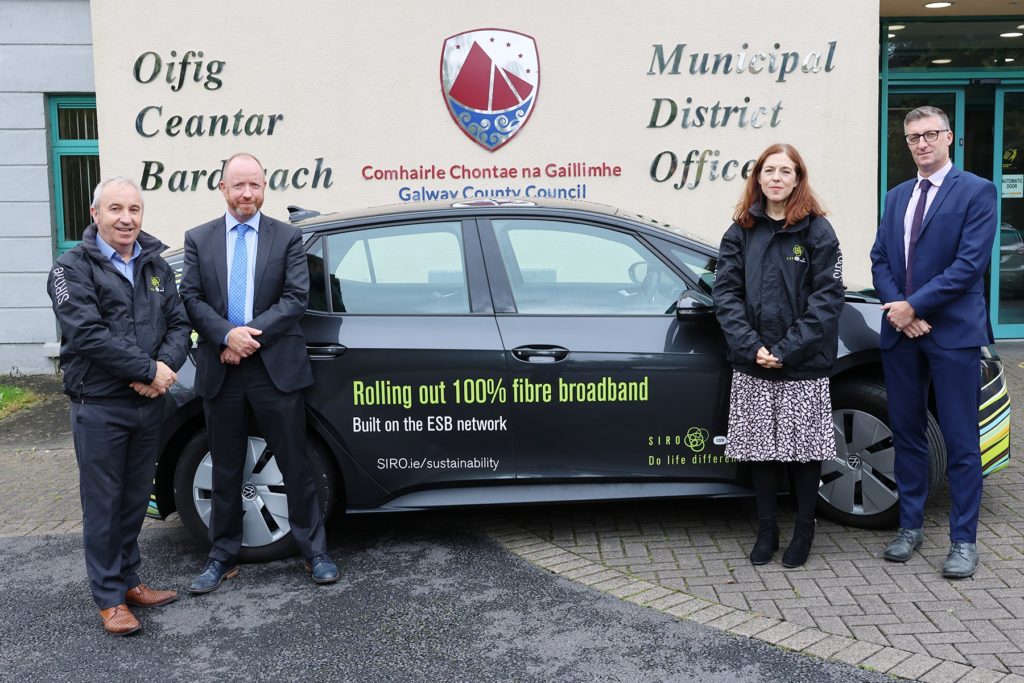 SIRO is a joint venture company between ESB and Vodafone, founded in 2015. SIRO’s state-of-the-art fibre broadband network is built on the ESB electricity infrastructure, trusted for its reliability and resilience. Overall, the company is investing more than €1 billion in delivering high speed, future proofed broadband across Ireland.
Commenting on the launch in Ballinasloe and Loughrea, SIRO CEO John Keaney said:
“Since we first started rolling out our network in Galway city, over four years ago demand has been strong for SIRO’s fibre broadband service. Our expansion now to Loughrea and Ballinasloe reflects the broader demand across Galway – city and county.
“Reliable, resilient and future proofed broadband is a game changer for regional towns and having access to SIRO’s network will create huge investment and job creation opportunities for towns such as Ballinasloe and Loughrea.
“SIRO is pleased to support this objective and to play a part in giving individuals and businesses a choice about where and how they live and work. We have had positive engagement with local stakeholders on the ground in both towns and we are now excited about getting on with our roll-out and connection process in the months ahead,” added Mr. Keaney.
Welcoming today’s announcement from SIRO, Galway County Council Chief Executive Jim Cullen stated:
“The building of these fibre networks will be a significant investment in these two towns.
The delivery of such infrastructure is a key economic enabler for existing business, with the potential to help increase their online presence and to trade online nationally and internationally.
“It will have positive impacts for both towns around growth, economic spin off effects & makes these towns more attractive for future investment.
“It will open up opportunities for citizens to work locally, with the delivery of high-speed connectivity, as remote working becomes more realistic for larger numbers of people, which should lead to a lowering of the towns carbon footprints and the residents of these towns will have more choice on broadband service provision in the future,” added Mr Cullen
SIRO as an open access wholesaler, partners with twenty broadband retailers across Ireland, to ensure that customers and businesses enjoy greater choice and competition.
Retailers offering SIRO residential, or enterprise broadband products include: Digiweb, Blacknight, Airwire, Sky, Vodafone, Virgin, Fastcom, Telcom, Viatel and Pure Telecom.
To register your interest, and to find out when SIRO will become available to your home or business, click here
[mailchimp_modal button-text="Register Your Interest" title="Sign Up Form" position="mid"]
SIRO is a joint venture company between ESB and Vodafone, founded in 2015. SIRO’s state-of-the-art fibre broadband network is built on the ESB electricity infrastructure, trusted for its reliability and resilience. Overall, the company is investing more than €1 billion in delivering high speed, future proofed broadband across Ireland.
Commenting on the launch in Ballinasloe and Loughrea, SIRO CEO John Keaney said:
“Since we first started rolling out our network in Galway city, over four years ago demand has been strong for SIRO’s fibre broadband service. Our expansion now to Loughrea and Ballinasloe reflects the broader demand across Galway – city and county.
“Reliable, resilient and future proofed broadband is a game changer for regional towns and having access to SIRO’s network will create huge investment and job creation opportunities for towns such as Ballinasloe and Loughrea.
“SIRO is pleased to support this objective and to play a part in giving individuals and businesses a choice about where and how they live and work. We have had positive engagement with local stakeholders on the ground in both towns and we are now excited about getting on with our roll-out and connection process in the months ahead,” added Mr. Keaney.
Welcoming today’s announcement from SIRO, Galway County Council Chief Executive Jim Cullen stated:
“The building of these fibre networks will be a significant investment in these two towns.
The delivery of such infrastructure is a key economic enabler for existing business, with the potential to help increase their online presence and to trade online nationally and internationally.
“It will have positive impacts for both towns around growth, economic spin off effects & makes these towns more attractive for future investment.
“It will open up opportunities for citizens to work locally, with the delivery of high-speed connectivity, as remote working becomes more realistic for larger numbers of people, which should lead to a lowering of the towns carbon footprints and the residents of these towns will have more choice on broadband service provision in the future,” added Mr Cullen
SIRO as an open access wholesaler, partners with twenty broadband retailers across Ireland, to ensure that customers and businesses enjoy greater choice and competition.
Retailers offering SIRO residential, or enterprise broadband products include: Digiweb, Blacknight, Airwire, Sky, Vodafone, Virgin, Fastcom, Telcom, Viatel and Pure Telecom.
To register your interest, and to find out when SIRO will become available to your home or business, click here
[mailchimp_modal button-text="Register Your Interest" title="Sign Up Form" position="mid"]  SIRO is a joint venture company between ESB and Vodafone, founded in 2015. SIRO’s state-of-the-art fibre broadband network is built on the ESB electricity infrastructure, trusted for its reliability and resilience. Overall, the company is investing more than €1 billion in delivering high speed, future proofed broadband across Ireland to 154 cities and towns.
The company already has a significant presence in North Dublin where it is available to
SIRO is a joint venture company between ESB and Vodafone, founded in 2015. SIRO’s state-of-the-art fibre broadband network is built on the ESB electricity infrastructure, trusted for its reliability and resilience. Overall, the company is investing more than €1 billion in delivering high speed, future proofed broadband across Ireland to 154 cities and towns.
The company already has a significant presence in North Dublin where it is available to  Commenting on the sponsorship, Michael Keegan, who helps run the academy at Trinity Donaghmede FC notes:
“Before Covid hit we had 17 teams within the club. Since then, this has grown by a further 7 teams to 24 today. Ideally every team needs a sponsor. What this sponsorship does is give an incredible boost for the club - kids, managers / parents, which can’t be underestimated.
“It is a huge boost for all involved. Without a sponsor's kind generosity, the club wouldn't exist"
“Most of all, the kids' faces and their excitement when they receive the new gear is priceless! It's all voluntary, so getting yearly sponsorships is massive for our club. It makes it all worthwhile.”
SIRO is available in Donaghmede and across Fingal. For more information on if SIRO is available for your home or business, please visit
Commenting on the sponsorship, Michael Keegan, who helps run the academy at Trinity Donaghmede FC notes:
“Before Covid hit we had 17 teams within the club. Since then, this has grown by a further 7 teams to 24 today. Ideally every team needs a sponsor. What this sponsorship does is give an incredible boost for the club - kids, managers / parents, which can’t be underestimated.
“It is a huge boost for all involved. Without a sponsor's kind generosity, the club wouldn't exist"
“Most of all, the kids' faces and their excitement when they receive the new gear is priceless! It's all voluntary, so getting yearly sponsorships is massive for our club. It makes it all worthwhile.”
SIRO is available in Donaghmede and across Fingal. For more information on if SIRO is available for your home or business, please visit